
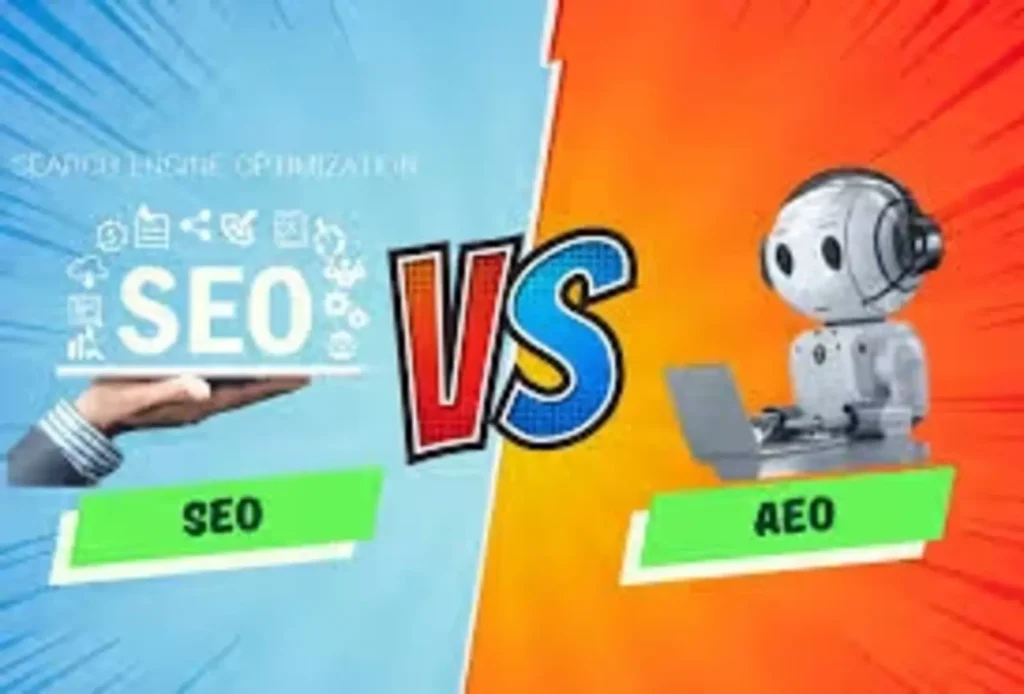
SEO/AEO Introduction: Beyond Traditional SEO and the Emergence of Answer Engine Optimization That Is Redefining Digital Success
The digital world is undergoing its biggest transformation since search engines first appeared. We are shifting from a search-driven internet to an answer-driven experience. With AI tools such as ChatGPT, Gemini, and Perplexity becoming part of everyday browsing, conventional SEO methods are no longer enough. As a result, Answer Engine Optimization (AEO) has emerged as a critical new digital strategy.
Traditionally, search engines acted as gateways to information, ranking websites based on keywords, backlinks, and technical signals. Today, AI-powered systems act more like knowledge assistants, understanding intent and delivering direct answers instantly. This shift changes how users interact with content and how brands must position themselves online. Instead of competing only for rankings on a search engine results page, businesses now compete to become the most reliable source of answers for AI systems.
As AI continues to integrate into browsers, mobile devices, and voice assistants, Answer Engine Optimization is no longer optional. It is a strategic necessity for brands that want long-term visibility, authority, and trust in the digital ecosystem.
Understanding the Change in Answer Engine Optimization

How to Optimize for AEO(Answer Engine Optimization)
Success in AEO(Answer Engine Optimization )
depends on creating content that is easy for both AI systems and humans to understand:
Clear Answer-First Content:
Begin with brief, precise explanations. Follow an inverted pyramid approach by presenting key insights at the start. AI systems prioritize content that delivers immediate value, so answering the main question clearly within the first few lines significantly increases your chances of being selected.
Structured Data & Schema Markup:
Implement backend markup to help AI clearly interpret your content’s purpose and context. Structured data provides additional signals about your content type, such as FAQs, how-to guides, articles, or reviews. This technical layer improves how AI systems process and trust your information.
Natural, Conversational Writing:
Use question-based, long-tail phrases that mirror how people speak and search (Who, What, How, Why). Conversational language aligns with voice search, chat-based queries, and AI interactions, making your content more discoverable and relevant.
Beyond these core strategies, consistency and credibility play a vital role. Regularly updating content, citing reliable sources, and demonstrating expertise help build long-term trust with AI platforms. Brands that focus on user intent rather than keyword stuffing will gain a sustainable advantage in the Answer Engine Optimization landscape.
Shift from Search to Answers
Users no longer browse multiple links. AI tools now provide direct, summarized answers, changing how content is discovered.
Content Must Be Answer-Focused
Websites need clear, concise answers at the top of content so AI can easily extract and present information.
Authority Over Clicks
Answer Engine Optimization prioritizes trust and expertise, helping brands become reliable sources for AI instead of just chasing website traffic.

Thriving in the Zero-Click Age and the New Privacy Landscape
Understanding the Zero-Click Reality
Today, more than half of Google searches end without users visiting a website. Features like highlighted answers and AI-generated summaries now deliver information instantly on the search results page. While this shift reduces traditional website clicks, it opens a powerful new door for brand visibility and authority.
Growing Your Brand Without Relying on Clicks
Appearing in zero-click results still puts your brand in front of the right audience. When users see your name connected to helpful answers, trust begins to form. To make the most of this trend:
Establish niche authority: Create in-depth, expert content that goes beyond surface-level answers. This motivates users to explore your website for detailed insights and advanced guidance.Focus on first-party data: As third-party cookies fade away, building direct relationships is essential. Use newsletters, gated content, communities, and memberships to connect with your audience on your own terms.
Turning Privacy into a Competitive Advantage
By 2026, privacy isn’t optional—it’s a brand differentiator. Be clear and honest about how user data is collected and used. When people trust your data practices, they are more willing to share information voluntarily. This enables meaningful personalization without crossing privacy boundaries.
Final Thoughts
Modern digital success is no longer defined by traffic alone. Trust, transparency, and value matter more than ever. By embracing privacy-first strategies and delivering immediate value directly in search results, you can build a strong, future-proof brand that thrives in the evolving digital ecosystem.
The Sensory Web: Voice, Visuals, and Short-Form Mastery
The Evolution of Search
We are no longer tethered to a keyboard. The modern consumer “searches” with their voice while driving and with their camera while shopping. This “Sensory Web” requires a total visual and auditory overhaul of your digital presence.
Visual & Voice Search Optimization
Visual Search:

Platforms like Google Lens allow users to snap a photo of a product to find where to buy it. If your product images are low-res or lack “Alt-text” descriptions, you are losing sales. High-quality, multi-angle imagery is now a requirement, not an option.
Voice Search:
Voice queries are longer and more local. “Where is a digital marketing agency near me?” optimization is key for local businesses.
The Power of 15 Seconds
Short-form video continues to dominate as the primary consumption medium. Whether it’s TikTok, Reels, or YouTube Shorts, the window to capture attention is shrinking.
The Hook:
You have 2 seconds to stop the scroll.
Provide one tip, one laugh, or one “aha!” moment within 15–30 seconds.
Every video must have a clear, simple Call to Action (CTA).
Final Thought
Digital marketing in 2026 is fast, visual, and vocal. By mastering these three pillars—Voice, Visual, and Video—you can reach your audience exactly where they are, in the format they love most.
Conclusion
The evolution beyond traditional SEO marks a defining moment in the digital marketing landscape. As search behavior continues to shift from keyword-based exploration to intent-driven questioning, Answer Engine Optimization (AEO) has emerged as a strategic necessity rather than an optional enhancement. This transformation reflects a deeper change in how users interact with information—favoring clarity, immediacy, and relevance over endless navigation through links.
In the zero-click age, visibility is no longer measured solely by website traffic. Instead, it is defined by whether a brand becomes the trusted source that AI systems rely on to deliver accurate and meaningful answers. Platforms powered by artificial intelligence increasingly summarize, interpret, and present information directly to users, often without requiring a click-through. This reality challenges marketers to rethink success metrics and prioritize authority, usefulness, and contextual accuracy in content creation.
At the same time, the evolving privacy landscape has reduced access to granular user data, limiting traditional tracking and targeting methods. This shift places greater importance on first-party content quality, ethical data practices, and intent-focused optimization. AEO aligns naturally with this environment by emphasizing transparency, user value, and relevance rather than invasive data collection or aggressive optimization tactics.
By integrating Answer Engine Optimization AEO principles with strong foundational SEO, brands can adapt to both technological advancement and regulatory change. Creating answer-first content, using structured data, and adopting natural, conversational language allows businesses to remain visible, credible, and competitive in an AI-driven ecosystem. Ultimately, thriving in this new digital era means focusing less on chasing clicks and more on delivering genuine value—becoming not just searchable, but truly answerable.The evolution beyond traditional SEO marks a defining moment in the digital marketing landscape. As search behavior continues to shift from keyword-based exploration to intent-driven questioning, Answer Engine Optimization (AEO) has emerged as a strategic necessity rather than
The future of digital visibility is no longer driven solely by rankings, traffic, or clicks. As search behavior evolves toward AI-powered, answer-first experiences, Answer Engine Optimization (AEO) has become a critical extension of traditional SEO. Users now expect instant, accurate, and meaningful answers, and AI systems deliver those responses by prioritizing clarity, relevance, and authority. This shift signals a fundamental change in how brands must create and structure content.
In the zero-click age, success is defined by trust rather than traffic. Brands that provide clear, well-structured, and intent-focused content are more likely to be selected by AI engines as reliable sources of information. At the same time, growing privacy regulations have reduced reliance on user tracking, placing greater emphasis on ethical, high-quality, first-party content.Answer Engine Optimization AEO naturally aligns with this new reality by focusing on value, transparency, and user intent.
By combining strong SEO foundations with Answer Engine Optimization AEO best practices—such as answer-first writing, structured data, and conversational language—businesses can remain visible across both search engines and AI platforms. Ultimately, long-term digital success belongs to brands that move beyond being searchable and become genuinely answerable.
author:krishzz